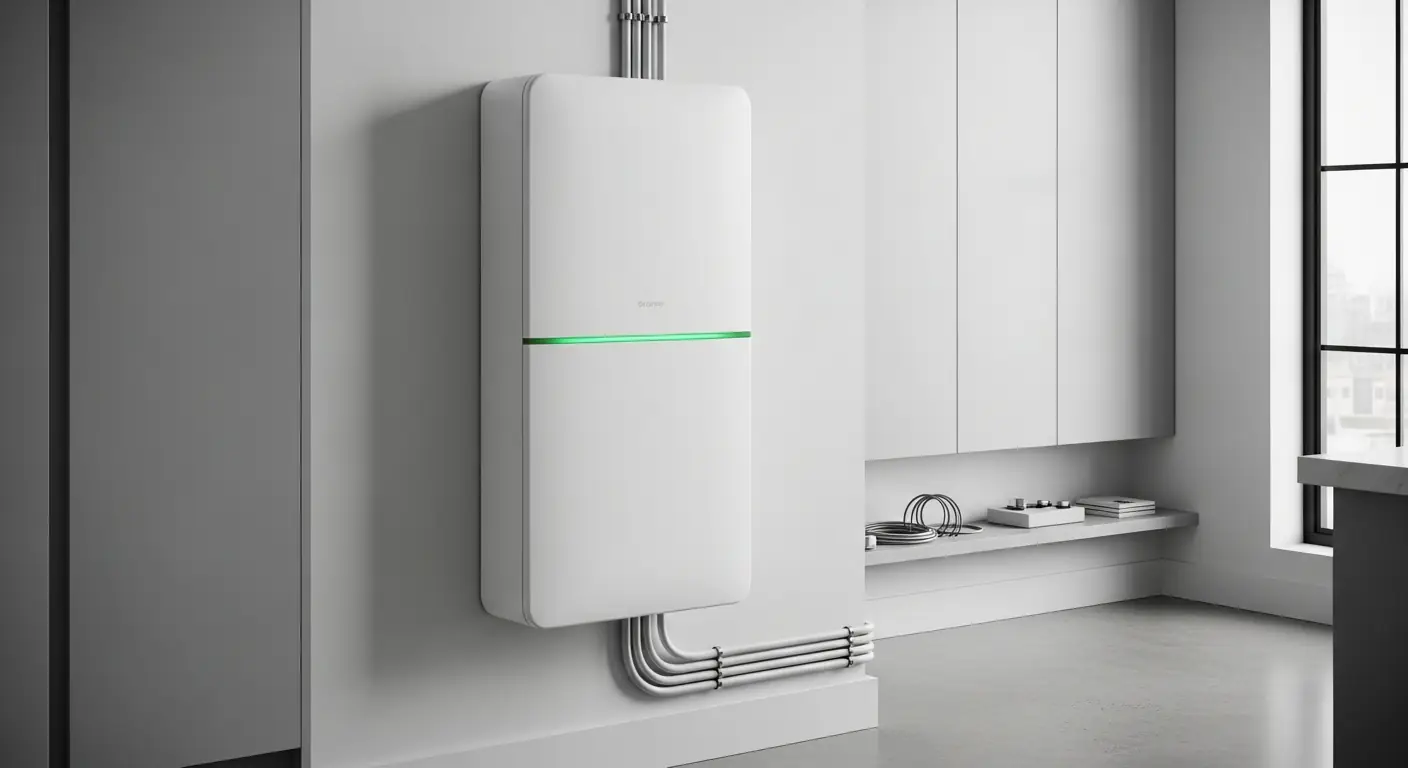
Batteries are not grant-covered and are not compulsory. What they change is how much of your own generation you get to use.
The question we are asked most after price is whether a battery is worth it. The honest answer is that it depends on when you use electricity, and it is worth understanding the mechanism before looking at numbers.
The problem a battery solves
Solar generates most in the middle of the day. Many households use most in the morning and the evening. Without storage, the midday surplus goes to the grid and you buy it back later at a higher rate than you were paid for it.
A battery closes that gap. It stores the surplus and releases it when you need it, so more of what your panels produce is actually used by your house.
The second use: cheap-rate charging
Less obvious, and often more valuable. On a time-of-use tariff, a battery can charge overnight on the cheap rate and discharge during expensive peak hours. That works whether or not the sun shone, which makes it useful year-round rather than seasonally.
What it does not do
- It is not covered by the SEAI grant. €1,800 applies to panels and installation only.
- It will not, on its own, take a typical home off-grid.
- It does not generate anything. It only shifts when you use what you have.
Who tends to benefit most
Households that are out during the day and use most of their electricity in the evening, and anyone on a time-of-use tariff. Households where somebody is home all day already use more of their generation directly, so the gain is smaller.
We will tell you straight if a battery does not make sense for your usage pattern. It is a significant part of the cost and there is no point in it if the numbers do not support it.